
Can You Really Regrow Lost Hair?
The question haunts millions of people every year: Is it truly possible to reverse hair loss and regrow a fuller head of hair without expensive treatments or harsh medications? The answer might surprise you. While genetics and age play a role, the real story behind hair loss reveals something far more hopeful—and actionable.
Hair loss affects over 50 million men and 30 million women in the United States alone, making it one of the most common health concerns people face. Most people assume hair loss is inevitable, a guaranteed consequence of aging or bad genes. But this perspective misses the deeper biological truth. Understanding how to reverse hair loss naturally begins with understanding the root cause—and that cause is far simpler than most people realize.
In this comprehensive guide, we'll explore the science of hair growth, uncover why you're actually losing hair, and introduce you to evidence-based natural strategies that can genuinely help you regrow hair and restore your scalp health. We'll also share the most effective meal combination to support your body's natural hair regeneration process.
Understanding the Science: How Hair Loss Actually Works
Why Some People Lose Hair While Others Don't
Before we can reverse hair loss, we need to understand why it happens in the first place. The most common type of hair loss is called androgenic alopecia, or pattern baldness. This condition creates a predictable pattern: in men, hair disappears from the crown and hairline; in women, hair becomes progressively thinner across the crown and parting area.
But here's what puzzles most people: why can someone lose all the hair on their head while maintaining thick, healthy facial hair? Why does hair fall out in specific patterns? The answer lies in understanding how individual hair follicles function and respond to hormonal changes.
The Hair Follicle: Nature's Micro-Factory
Each strand of hair grows from a specialized structure called a hair follicle—a tiny factory embedded deep in your scalp that controls hair growth. Here's what's crucial to understand: the follicle is not the hair itself. Think of it as the soil that grows the plant. Without healthy soil, nothing grows, no matter how much water and sunlight you provide.
Every follicle requires two essential ingredients to function properly:
- Abundant oxygen flow – Follicles are metabolically active and require constant oxygen supply
- Mitochondrial energy – Mitochondria are the cell's “power plants,” generating the ATP (energy) needed for hair production
When either of these elements becomes compromised, hair production slows and eventually stops. This is where the cascade of hair loss begins.
The Hormone Connection: Why DHT Levels Matter
The Testosterone-to-DHT Conversion
As we age, our hormone profiles shift dramatically. Testosterone levels gradually decline in both men and women—this is a well-documented biological fact. Simultaneously, something more problematic happens: the enzyme that converts testosterone into DHT (dihydrotestosterone) becomes increasingly active.
This is the paradox of aging hormones: as free testosterone decreases, DHT levels increase. Many prescription hair loss medications work by blocking DHT production, but this approach comes with potential side effects and doesn't address the underlying problem.
What High DHT Does to Your Scalp
When DHT levels become elevated, a destructive cascade begins in your hair follicles:
- Reduced oxygen delivery – DHT damages blood vessels in the scalp, restricting oxygen flow to follicles
- Inflammation develops – This triggers your immune system to attack follicles
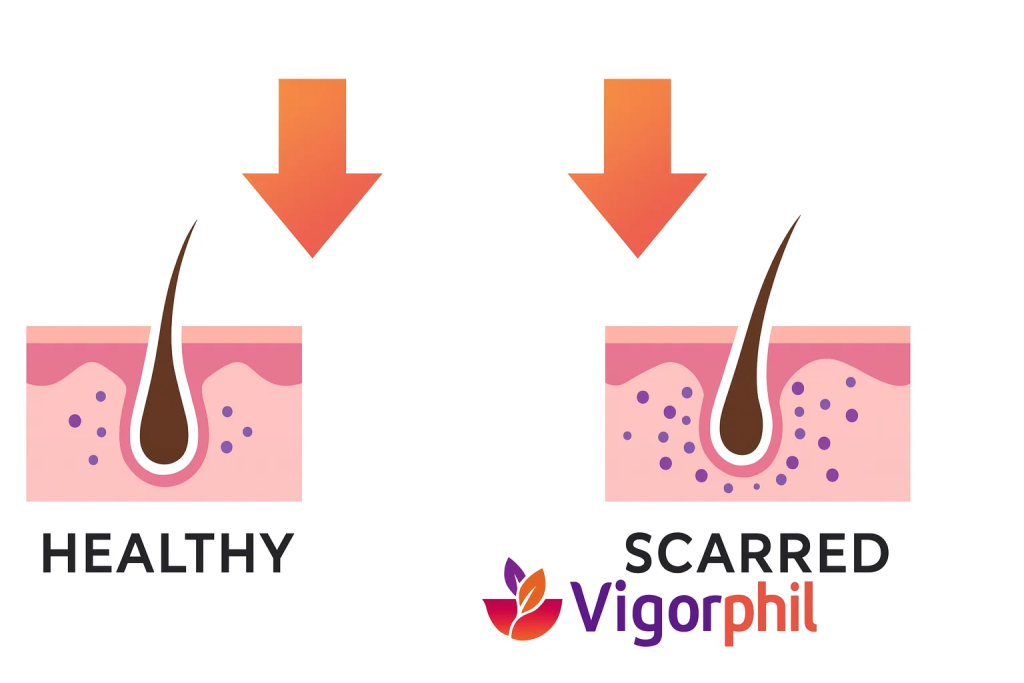
- Scar tissue formation – As your body attempts to “repair” the inflamed tissue, it creates protective scar tissue
- Follicle shutdown – Once surrounded by scar tissue, hair follicles cannot absorb oxygen or nutrients
- Visible baldness – The scalp develops that characteristic shiny appearance as scar tissue replaces hair-producing tissue
This is the biological mechanism behind androgenic pattern baldness—and it's not just about genetics or age.
The Missing Link: Insulin Resistance Is the Real Culprit
Why Most Hair Loss Treatments Fail
Here's what most people—and even many health professionals—miss: elevated DHT is not the primary cause of hair loss; it's a symptom of a deeper metabolic problem. That problem is insulin resistance.
Insulin resistance is when your cells stop responding efficiently to insulin, forcing your pancreas to produce more of it. This metabolic dysfunction has profound effects on hormones throughout your body, including a dramatic increase in the enzyme that converts testosterone to DHT.
The Insulin Resistance-Hair Loss Connection
When your body develops insulin resistance, several harmful cascades begin:
- Enzyme overproduction – Your body produces excessive amounts of the enzyme (5-alpha reductase) that converts testosterone into DHT
- Liver dysfunction – Insulin resistance damages liver function, impairing your body's ability to regulate and clear testosterone
- Free testosterone accumulation – With a compromised liver, more free testosterone circulates in your bloodstream
- DHT explosion – This excess testosterone converts into even more DHT, creating a vicious cycle
This explains why some people maintain full heads of hair their entire lives while others experience significant loss in their twenties or thirties. It also explains why genetics alone doesn't determine your hair fate. Two people with identical genetic predispositions can have completely different hair outcomes based on their insulin resistance levels.
The bottom line: You cannot achieve lasting hair regrowth without addressing insulin resistance. All other treatments provide only temporary relief.
Watch our complete video guide above for a visual walkthrough of these natural remedies and the science behind them.
For a more detailed explanation with visual demonstrations, watch our complete video guide above. Don't forget to subscribe to our YouTube channel for weekly natural health tips!
The Complete Natural Solution: Restore Your Follicle Environment
Why Treating Hair Loss Requires an Ecosystem Approach
Modern hair transplant technology can move hair follicles from one location to another, but surgeons cannot simply transplant the hair strand itself. They must transplant the entire follicle—the complete biological ecosystem. This reveals an important truth: you don't actually grow hair in a vacuum. You grow hair within a complex ecosystem that requires multiple elements to function optimally.
Restoring this ecosystem requires a multi-layered approach. We must address the inflammation, restore oxygen flow, reactivate dormant stem cells, support mitochondrial function, and correct the underlying insulin resistance that started the problem in the first place.
Strategy One: Mechanical Stimulation and Scalp Regeneration
Why Scalp Health Matters
One of the most effective yet overlooked treatments for hair loss is mechanical stimulation of the scalp. This approach works by breaking up the compacted, scarred tissue that restricts blood flow and suffocates follicles.
Micro-Needling: Breaking Up Scar Tissue
While many people practice intensive scalp massage (which does provide some benefit), the most scientifically supported mechanical approach is micro-needling. Using a derma roller with tiny needles creates controlled micro-injuries to the scalp, which triggers multiple beneficial responses:
- Scar tissue breakdown – The needle punctures break up established scar tissue that surrounds follicles
- Stem cell activation – The micro-trauma awakens dormant stem cells that can help regenerate tissue
- Increased blood flow – The healing response increases circulation to the scalp
- Oxygen penetration – Just as aerating compacted soil allows water to penetrate, micro-needling allows oxygen to reach deep follicles
Start with a derma roller featuring 1.0-1.5mm needles, used 1-2 times weekly. This mechanical stimulation essentially “wakes up” the follicle environment.
Strategy Two: Red Light Therapy for Mitochondrial Restoration
How Mitochondria Control Hair Growth
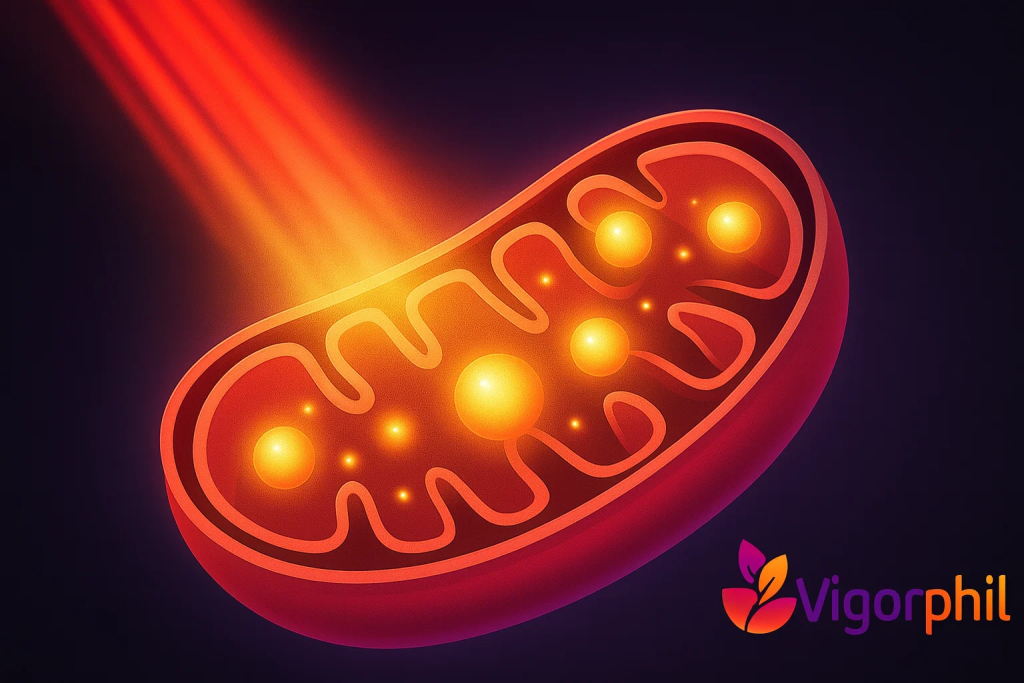
Inside every hair follicle lie mitochondria—the cellular structures that generate energy (ATP) to power all biological processes, including hair growth. In people experiencing hair loss, these mitochondria have become dysfunctional and depleted. Without mitochondrial energy production, follicles literally cannot manufacture hair.
Red Light and Near-Infrared Wavelengths
Red light therapy (also called photobiomodulation) uses specific light wavelengths to stimulate mitochondrial function. Research demonstrates that wavelengths between 630-850 nanometers penetrate the scalp tissue and stimulate the production of ATP, essentially “recharging” damaged mitochondria.
How to use red light therapy:
- Use a red light therapy device designed for scalp treatment
- Apply 3-4 times weekly for 10-15 minutes per session
- Maintain consistent distance as recommended by your device manufacturer
- Combine with micro-needling for amplified results (wait 24 hours between treatments)
The science here is compelling: dermatologists are even using red light therapy to treat vision problems by stimulating mitochondrial function in retinal cells. When mitochondria work again, cellular energy production resumes, and hair follicles have the energy they need to grow hair.
Strategy Three: Rosemary Oil for Enhanced Circulation
The Vasodilation Advantage
Interestingly, one common prescription hair loss medication works through a different mechanism than DHT blocking. Instead of inhibiting DHT production, it creates vasodilation—improved blood vessel function that increases circulation to the scalp. This reveals an important truth: blood flow and oxygen delivery are just as important as hormone control.
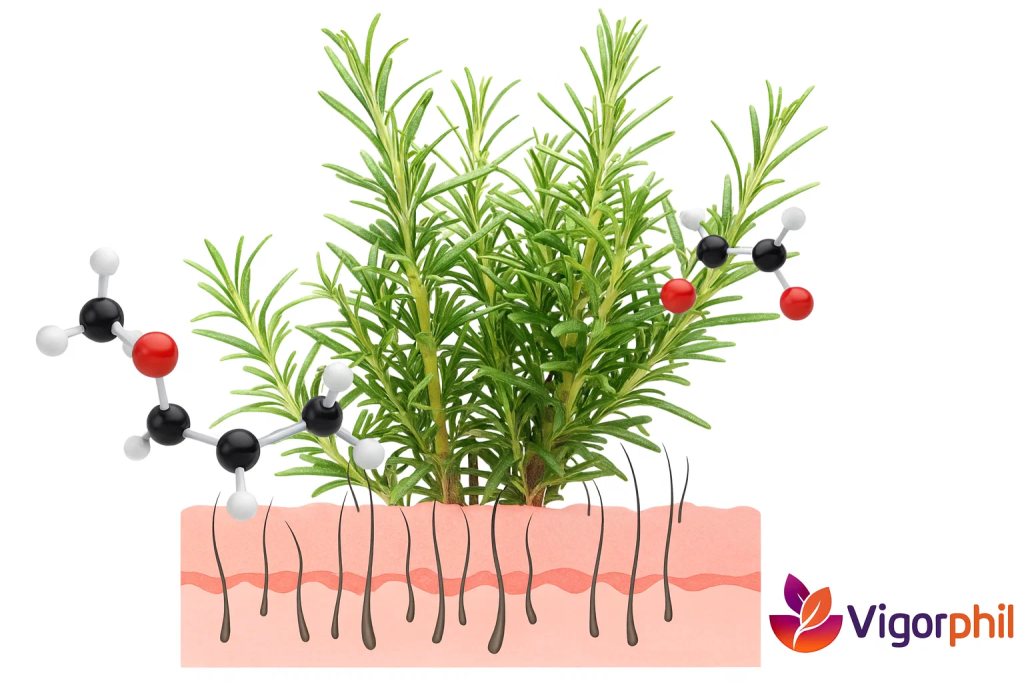
Among all natural remedies that create similar circulation-enhancing effects, rosemary oil stands out as remarkably effective. The plant compounds in rosemary oil offer multiple benefits:
- Enhanced vasodilation – Increases blood flow to the scalp
- Natural DHT reduction – Contains compounds that inhibit 5-alpha reductase enzyme
- Anti-inflammatory effects – Reduces the scalp inflammation that drives scar tissue formation
- Mitochondrial protection – Protects cellular energy production from oxidative damage
How to Use Rosemary Oil
Application method:
- Mix 2-3 drops of pure rosemary essential oil with 1 tablespoon of coconut oil as a carrier
- Massage gently into your scalp for 5-10 minutes, focusing on thinning areas
- Apply 3-4 times weekly
- Leave on for at least 30 minutes (or overnight if preferred)
This multi-layered approach—combining mechanical stimulation, energy production support, and circulation enhancement—creates a powerful synergistic effect far superior to any single treatment alone.
The Foundation: Fixing Insulin Resistance
Why You Must Address the Root Cause
Even if you implement all three strategies above perfectly, you will not achieve lasting hair regrowth unless you address the fundamental issue: insulin resistance. Think of insulin resistance as the soil that grows the disease. You can plant new seeds (try new treatments) all day, but if the soil remains contaminated, those seeds won't flourish.
Natural Methods to Reverse Insulin Resistance
Dietary modifications:
- Eliminate refined carbohydrates – Sugar and refined grains spike insulin levels; remove them
- Increase whole plant foods – Whole grains, legumes, fruits, and vegetables improve insulin sensitivity
- Include healthy fats – Nuts, seeds, and avocados support metabolic health
- Emphasize fiber – High-fiber foods stabilize blood sugar and improve insulin function
Lifestyle factors:
- Intermittent fasting – When appropriate for your health situation, fasting periods allow insulin levels to reset
- Regular physical activity – Exercise is one of the most powerful insulin sensitizers known
- Stress management – Chronic stress elevates cortisol, which worsens insulin resistance
- Quality sleep – Poor sleep directly impairs insulin sensitivity and worsens metabolic dysfunction
The timeline: Reversing insulin resistance typically takes 2-3 months with consistent effort. During this time, you may not see dramatic hair regrowth, but you're creating the metabolic foundation for success.
Essential Nutrients for Hair Growth and Regeneration
The Two Most Critical Nutrients
Among the dozens of nutrients that support hair health, two stand out as absolutely essential for stimulating the stem cells and growth factors within hair follicles: zinc and vitamin D.
Zinc: The Follicle Activator
Zinc is required for DNA synthesis, protein production, and immune function—all critical for hair growth. Zinc deficiency directly correlates with hair loss, and zinc supplementation has been shown to stimulate hair regrowth in zinc-deficient individuals.
Recommended dosage: 30-40 mg daily
Food sources (plant-based):
- Pumpkin seeds (excellent source)
- Hemp seeds
- Sunflower seeds
- Chickpeas and legumes
- Whole grains
Vitamin D3: The Growth Factor Stimulator
Vitamin D acts as a hormone in your body and is essential for regulating the growth and cycling of hair follicles. Research consistently shows that vitamin D deficiency is associated with multiple forms of hair loss, and vitamin D supplementation can support hair regrowth.
Recommended dosage: 10,000 IU daily (have your levels tested; optimal range is 50-80 ng/mL)
Plant-based sources:
- Fortified plant-based milks
- Mushrooms exposed to sunlight
- Nutritional yeast
- Supplementation (especially important for those with limited sun exposure)
You can find premium vitamin D3 supplements (derived from lichen for plant-based options), zinc supplements, and other essential nutrients for hair health in our curated selection at https://vigorphil.com/healthstore.
Natural DHT Inhibitors: Your Chemical-Free Options
Understanding DHT Inhibition
While we don't want to eliminate DHT entirely (it plays important roles in energy and vitality), we do want to keep levels within a healthy range. Several plant-based compounds naturally inhibit the 5-alpha reductase enzyme that converts testosterone to DHT.
The Most Effective Natural DHT Inhibitors
- Contains compounds that block 5-alpha reductase
- Also provides zinc for follicle health
- Can be taken as a supplement or used topically
- Dosage: 400-500 mg daily
- Traditional herb used for centuries
- Research supports its DHT-inhibiting effects
- Well-tolerated with minimal side effects
- Dosage: 160 mg twice daily
Green tea extract (EGCG)
- EGCG compound powerfully inhibits DHT production
- Also provides antioxidant protection to mitochondria
- Supports anti-inflammatory effects
- Dosage: 300-500 mg daily or 2-3 cups of green tea
- Topical application supports circulation
- May reduce DHT in scalp tissue
- Mix 2-3 drops with carrier oil; apply to scalp
- Can also be consumed as tea
Zinc (mentioned above as nutrient)
- Acts as natural enzyme inhibitor
- Part of comprehensive nutritional support
You don't need to use all of these. Start with one or two that appeal to you, then assess results after 2-3 months before adding additional support.
The Optimal Hair Growth Meal Plan
Plant-Based Nutrition for Scalp Health
Now let's address the practical side: what should you actually eat to support hair regrowth? Vigorphil focuses on plant-based nutrition for optimal health and hair regeneration. Here's the scientifically-backed meal combination that provides maximum support for your hair follicles:
The Core Components
Start with pumpkin seeds
- Rich in magnesium for cellular energy
- Excellent source of trace minerals
- Provide zinc for follicle stimulation
- Contain compounds that inhibit DHT
- Serving: ¼ cup daily
Add onions (raw or lightly cooked)
- Extremely high in quercetin, a powerful anti-inflammatory
- Quercetin reduces scalp inflammation that drives hair loss
- Also provide prebiotic fiber for gut health
- Serving: ½ to 1 medium onion daily
Include sauerkraut or fermented vegetables
- Most people don't realize this: sauerkraut contains approximately 700 mg of vitamin C per half-cup serving
- Contains over 600 different plant compounds with beneficial effects
- These compounds help decrease DHT levels
- Fermentation creates beneficial probiotics for gut health
- Gut health directly influences hormone metabolism
- Serving: 2-3 tablespoons daily
Layer in leafy greens
- Spinach, kale, and other dark greens provide minerals
- Rich in folate and other B vitamins for hair protein synthesis
- Serving: 2+ cups daily in salads or smoothies
Add green tea
- Contains EGCG, a powerful DHT inhibitor
- Provides antioxidant support for mitochondria
- Serving: 2-3 cups daily
Include selenium-rich foods
- Brazil nuts (2-3 nuts daily provides adequate selenium)
- Sunflower seeds
- Selenium supports hair follicle function and thyroid health
- Serving: Variety throughout the week
Sample Hair-Health Meal
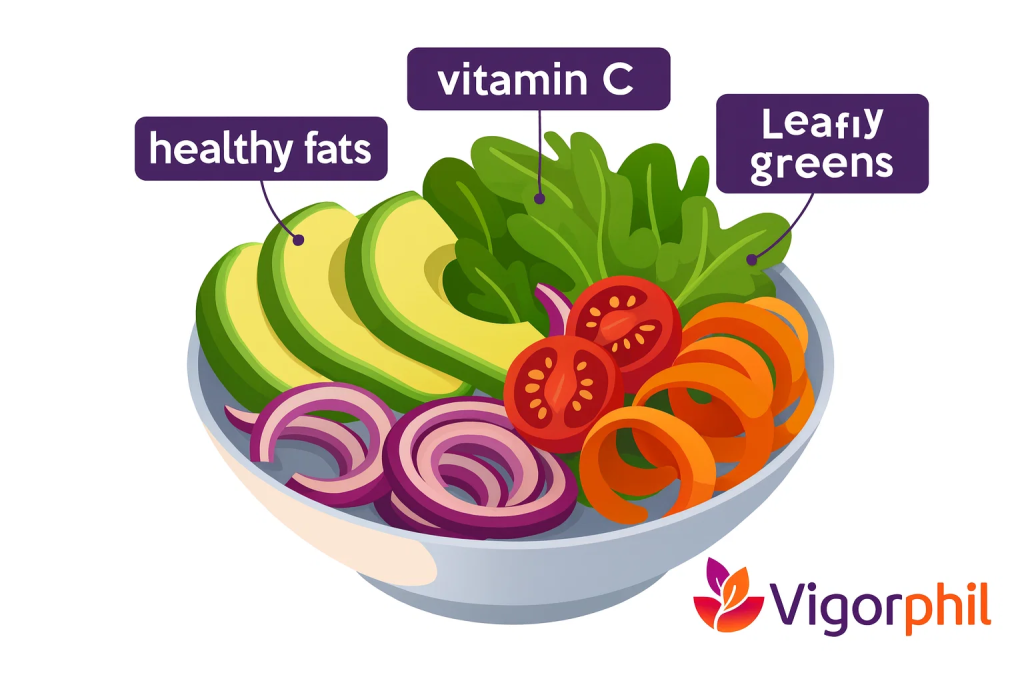
Create a powerful salad or bowl combining:
- 2 cups fresh spinach or kale
- ¼ cup raw pumpkin seeds
- ½ cup sliced raw onions
- 3 tablespoons fermented sauerkraut
- 1 tablespoon ground sunflower seeds
- Drizzle of extra-virgin olive oil and lemon juice
- Side of green tea
This single meal provides comprehensive nutritional support for your hair regeneration efforts, addressing inflammation, DHT levels, vitamin and mineral needs, and mitochondrial function simultaneously.
Your Complete Action Plan: Step-by-Step Implementation
Phase 1: Foundation (Weeks 1-4)
Start here without overwhelming yourself. These are the most important interventions:
- Fix insulin resistance – Begin reducing refined carbohydrates and sugar; increase whole plant foods
- Add key nutrients – Start vitamin D3 (10,000 IU daily) and zinc (30-40 mg daily)
- Implement the optimal meal – Eat the hair-health meal or its components 4-5 times weekly
- Begin scalp care – Start gentle scalp massage 3-4 times weekly for 5-10 minutes
Phase 2: Enhancement (Weeks 5-12)
Once you're comfortable with Phase 1, add these interventions:
- Introduce rosemary oil – Begin applying 3-4 times weekly with coconut oil carrier
- Add natural DHT inhibitors – Select one (pumpkin seed oil, green tea extract, or saw palmetto) and begin
- Start mechanical stimulation – Incorporate gentle micro-needling 1-2 times weekly
Phase 3: Optimization (Week 13+)
When you've established consistent habits:
- Add red light therapy – Implement 3-4 times weekly for 10-15 minute sessions
- Combine therapies – Create a comprehensive routine combining multiple strategies
- Monitor and adjust – Track hair changes; modify as needed based on results
Important Timeline Expectations
Months 1-2: No dramatic visible changes expected, but you're building the biological foundation. You may notice less shedding or slightly improved scalp health.
Months 3-4: First visible signs of improvement may appear—reduced hair loss, possibly small new hairs becoming visible.
Months 5-6+: More noticeable regrowth, thicker hair texture, improved scalp appearance.
Remember: you're not treating symptoms; you're healing an entire biological ecosystem. This takes time, but the results are genuine and lasting.
Addressing Common Questions
How long until I see results?
Hair grows in cycles, and follicles that have been dormant for years need time to reactivate. Most people see meaningful improvement within 4-6 months of consistent implementation, with more dramatic changes by 6-12 months. Be patient with the process.
Can I use these methods if I'm on hair loss medications?
Yes, but consult your healthcare provider about any interactions. These natural approaches work through different mechanisms and can often enhance results of medical treatments. Never stop medications without medical guidance.
What if I have severe hair loss already?
These strategies work best for early-stage to moderate hair loss. If you have significant baldness with extensive scarring, you may benefit from combining these natural approaches with professional treatments like PRP therapy or hair transplantation.
Do I need to do everything at once?
No. Start with foundation phase and gradually add strategies. Most people find that consistent implementation of insulin resistance correction, key nutrients, and scalp care provides excellent results without adding every possible intervention.
Important Disclaimer
This information is provided for educational purposes and is not intended as medical advice. Individual results vary based on genetics, overall health, consistency of implementation, and the severity of hair loss. Consult with a qualified healthcare provider before beginning any new supplement regimen or making significant dietary changes, especially if you have existing health conditions or take medications.
Conclusion: Your Hair Can Grow Back
The scientific evidence is clear: hair loss is not inevitable, and natural hair regrowth is genuinely possible when you address root causes and create the right scalp environment. You don't need expensive medications or risky procedures. Your body has an extraordinary ability to heal and regenerate when given the right conditions.
The key is understanding that hair loss results from a combination of factors—insulin resistance, hormonal imbalance, scalp inflammation, poor circulation, and mitochondrial dysfunction. By addressing each of these systematically, you can create real, lasting change.
Ready to transform your hair naturally? Start implementing these evidence-based strategies today. Begin with correcting insulin resistance and adding zinc and vitamin D3. Then gradually incorporate the other strategies as you develop consistent habits. Consistency matters far more than perfection—steady implementation over months yields genuine results.
To support your natural hair regrowth journey, explore our carefully curated selection of high-quality supplements, essential oils, and natural health products at https://vigorphil.com/healthstore. We've selected only premium, plant-based options aligned with natural wellness principles.
We'd love to hear from you: What strategy resonates most with you? Which will you try first? Share your experience in the comments below—your questions and successes help our community learn and grow together. Don't forget to subscribe to our newsletter for exclusive natural health insights delivered weekly to your inbox.
Remember: your hair can grow back. You just need to create the right conditions and commit to consistent action. Your healthiest hair is still ahead of you.